

خشکسالی؛ وقتی یک کشور بحران را مدیریت میکند و دیگری بحران را تولید

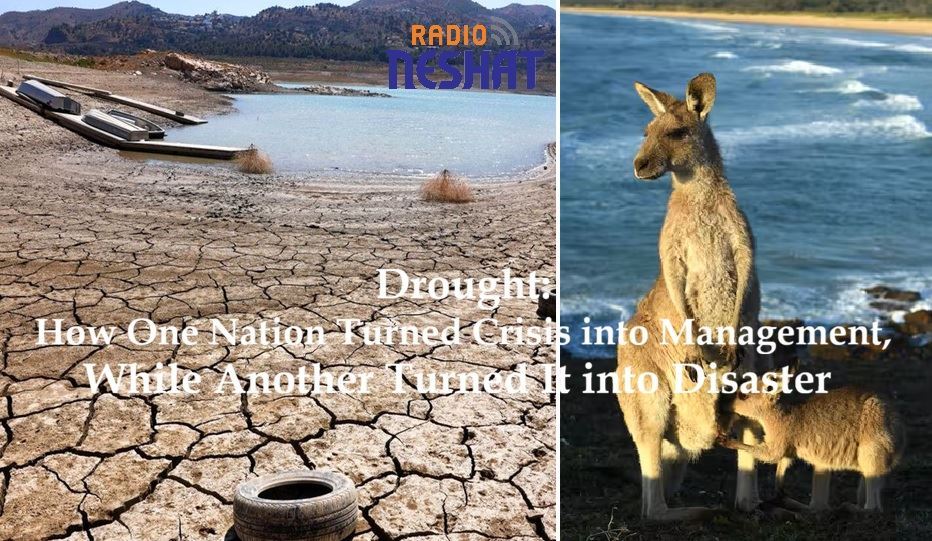
وقتی استرالیا از دل خشکسالی تاریخساز شد و به جهان درس مدیریت بحران داد، ایران همان مسیر را وارونه رفت و تبدیل شد به نمونهای که امروز در دانشگاههای دنیا نه برای افتخار، بلکه برای هشدار تدریس میشود.
نویسنده مسعود ظهوری - رادیو نشاط
خشکسالی در استرالیا تنها یک دورهی سخت نبود؛ یک کابوس ۱۲ ساله بود که از اواخر دهه ۱۹۹۰ تا سال ۲۰۰۹ نفس کشاورزی، اقتصاد و حتی زندگی روزمره مردم را گرفت. سدها به پایینترین سطح تاریخی رسیدند، شهرها با کمبود آب شرب روبهرو شدند و دامداران بسیاری کسبوکار خود را از دست دادند. اما این پایان ماجرا نبود؛ اینجا نقطهای است که تفاوت یک تصمیمگیری علمی با حکمرانی احساسی مشخص میشود.
در همین سالها دولتهای ایالتی و فدرال استرالیا بهجای انکار بحران، آن را به رسمیت شناختند و با دانشگاهها، آبپژوهان و اقلیمشناسان وارد همکاری شدند. نتیجه چه بود؟
ساخت گسترده تصفیهخانههای آب دریا (Desalination Plant) در ملبورن و پرث، بازچرخانی فاضلاب برای کشاورزی، محدودیت مصرف آب شهری، تدوین سیاستهای سختگیرانه برای برداشت آب زیرزمینی، توسعه سیستمهای پایش اقلیم و دهها پروژه دیگر. امروز بخش عمده این تجربیات در معتبرترین دانشگاههای جهان از جمله ملبورن، موناش، ANU و UNSW بهعنوان نمونه موفق مدیریت بحران آب تدریس میشود. درس اصلی چه بود؟
راهحل نجات از بحران نه انکار واقعیت است و نه صرفاً ساخت سد؛ بلکه فهم علمی، برنامهریزی بلندمدت و احترام به طبیعت است.
اما در آن سوی این مقایسه، ایران ایستاده است؛ سرزمینی با تمدنی چندهزار ساله در مدیریت آب، با قناتهایی که روزگاری شگفتی جهان بودند. امروز اما همان کشور درگیر بحرانی عمیقتر از کمآبی است؛ بحرانی به نام سوءمدیریت منابع آب. دهههاست کارشناسان هشدار میدهند، اما دولتها مسیر معکوس علم را رفتهاند:
سدسازیهای بیرویه بر بستر رودخانههایی که توان اکولوژیک نداشتند، انتقالهای پرهزینه بینحوضهای، برداشت بیحساب از آبهای زیرزمینی، نابودی تالابهایی چون گاوخونی و هورالعظیم، خشکیدن زایندهرود و ارومیه، فروچالههای یزد و کرمان، و هزاران چاه غیرمجاز که خاک زیر پایمان را پوک کردهاند. امروز میلیونها ایرانی زیر سایه این اشتباهات زندگی میکنند؛ روستاهایی بیآب، کشاورزانی درمانده، و شهری مثل خوزستان که روزی رودخانههایش نماد زندگی بود، حالا با آب جیرهبندی روز خود را آغاز میکند.
در دانشگاههای جهان، استرالیا بهعنوان نمونه موفق مدیریت بحران تدریس میشود؛
و ایران بهعنوان هشدار تلخ بیتوجهی به علم.
دانشجویان آب و محیطزیست در کلاسها میخوانند که چگونه یک کشور با بحران روبهرو شد، سرمایهگذاری کرد و آینده ساخت؛
و چگونه کشوری دیگر با بیتوجهی به هشدارها، بحران را از طبیعی به انسانی تبدیل کرد.
تاریخ آب در ایران و استرالیا به ما چیزی ساده اما حیاتی یادآوری میکند:
کشوری که بحران را میبیند، میفهمد و برایش برنامه دارد، به دانشگاههای جهان درس میدهد.
و کشوری که بحران را انکار میکند، خود تبدیل به درس عبرت دیگران میشود.
در پایان، شاید مهمترین پرسش امروز این باشد:
آیا هنوز دیر نشده که ایران دوباره به میراث قنات بازگردد، به علم گوش بسپارد و آیندهای متفاوت انتخاب کند؟
یا باید بپذیریم که جهان همچنان اقدامات استرالیا را بهعنوان راهحل و سیاستهای ایران را بهعنوان هشدار تدریس خواهد کرد؟
------------------------------
Drought: When One Country Manages the Crisis, and Another Creates It
When Australia emerged from a historic drought and turned the crisis into a lesson of resilience for the world, Iran walked the opposite path—becoming a case study now taught in universities not as a success, but as a warning.
By Masoud Zoohori – Radio Neshat
Drought in Australia was not just a difficult period; it was a 12-year nightmare. From the late 1990s to 2009, farming collapsed, the economy suffered, and everyday life was disrupted. Dam levels dropped to record lows, several regions faced drinking-water shortages, and many farmers lost their livelihoods. Yet this is precisely where the distinction between scientific decision-making and emotional governance becomes clear.
During those years, both state and federal governments in Australia acknowledged the crisis instead of denying it, and partnered with universities, hydrologists, and climate scientists. The result?
The construction of large-scale desalination plants in Melbourne and Perth, recycled wastewater for agriculture, strict urban water-use restrictions, groundwater extraction regulations, climate monitoring systems, and dozens of other initiatives. Today, these measures are taught in top universities such as Melbourne, Monash, ANU, and UNSW as global examples of drought management.
The lesson was simple: survival does not come from denial—or from building dams alone—but from science-based planning, long-term strategy, and respect for nature.
Across from this comparison stands Iran—a land once famed for its mastery of water, the birthplace of qanats admired for centuries. Yet today, the country faces a crisis deeper than water scarcity: mismanagement of water resources. Experts have warned for decades, yet governments moved in the opposite direction:
Uncontrolled dam construction, costly inter-basin water transfers, excessive extraction of groundwater, the deterioration of wetlands such as Gavkhouni and Hoor-al-Azim, the drying of Zayandeh-Rud and Lake Urmia, land subsidence across Yazd and Kerman, and thousands of illegal wells that have hollowed the earth beneath our feet. Millions of Iranians now live under the shadow of these decisions—villages without water, farmers abandoned, and a province like Khuzestan, once fed by mighty rivers, now begins its day with water rationing.
In classrooms around the world, Australia is taught as a successful case of crisis management,
while Iran is taught as a cautionary tale of ignoring science.
Students of environmental science learn how one nation confronted crisis, invested, and built a future—
and how another, by neglecting warnings, turned a natural drought into a man-made disaster.
History reminds us of a simple truth:
A nation that recognizes its crisis and plans for it becomes a lesson for the world.
A nation that denies it becomes a lesson for others to avoid.
And now, the crucial question remains:
Is it still possible for Iran to return to the wisdom of qanats, listen to science, and choose a different future?
Or must we accept that, for years to come, Australia will be taught as the solution,
and Iran as the warning?